There’s a certain stillness about trailers that you don’t notice at first. They’re not rushing like cars, not weaving through traffic. They just… exist. Parked outside a job site, rolling steadily down a highway, waiting their turn in a loading yard.
And yet, every now and then, one catches your attention. Not in a loud, in-your-face way. Just enough to make you look twice. That subtle pull? It’s not accidental.
Turning Everyday Movement Into Visibility
Most businesses spend a lot of time trying to get noticed — ads, promotions, online campaigns that come and go. But trailers operate in a different space. They don’t interrupt your day. They become part of it.
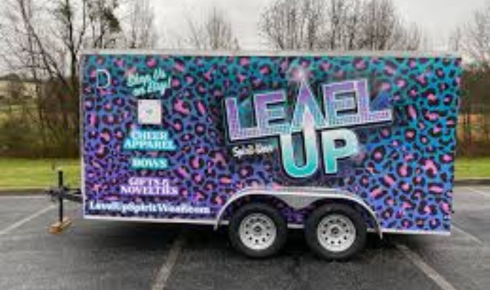
That’s where trailer graphics come into play. They transform a plain surface into something that communicates quietly. A logo, a color palette, maybe a simple message — nothing overwhelming, just enough to leave a trace in your memory.
It’s almost like background music. You’re not actively listening, but somehow, it stays with you.
Why Familiarity Feels Like Trust
We don’t always realize how much repetition influences us. Seeing the same name or design again and again — on different streets, in different contexts — creates a sense of familiarity.
And familiarity, more often than not, turns into trust.
That’s the understated power of branded trailers. They don’t rely on a single moment of attention. Instead, they show up consistently, quietly reinforcing a presence over time.
You might not remember where you first saw it. But when the time comes to choose a service, that name feels… known. And that matters more than most people think.
More Than Just a Moving Billboard
It’s easy to label trailers as just another form of advertising. But that doesn’t quite capture what’s happening.
A trailer wrapped with intention doesn’t feel like an ad. It feels like part of the business itself. Like an extension of its identity.
That’s why many companies invest in wrap solutions that go beyond basic branding. They’re not just adding visuals — they’re creating something that aligns with how they want to be perceived.
Clean, professional, reliable. Or bold, creative, a little unconventional. Whatever the message is, the wrap carries it without needing to say much.
Designing for Real Life, Not Just Screens
One thing that often gets overlooked is how different real-world design is compared to digital design. On a screen, you have control — lighting, distance, focus. On the road, you don’t.
People see trailers from different angles, at different speeds, under different lighting conditions. Sometimes they’re close, sometimes they’re far away.
So the design has to work in all those situations.
That means clarity over complexity. Strong contrasts, readable text, visuals that hold their shape even from a distance. It’s less about showing everything and more about showing the right things.
And when it works, it feels effortless — like the design belongs there.
The Practical Side That Adds Value
Beyond visibility, there’s a practical benefit that often gets overlooked. Wraps act as a protective layer for the trailer’s surface.
Think about it — long hours in the sun, exposure to dust and debris, general wear and tear from the road. Over time, it all adds up. A wrap helps absorb some of that impact, preserving the original finish underneath.
It’s not the main reason businesses choose wraps, but it’s one of those quiet advantages that makes a difference in the long run.
A Slower, More Consistent Approach
Marketing today can feel fast and fleeting. Campaigns launch, trends shift, attention moves on. It’s a constant cycle.
Trailers don’t play that game.
They’re steady. Consistent. Once they’re out there, they keep working without needing constant updates or adjustments. No algorithms to chase, no metrics to obsess over. Just real-world presence, day after day.
And in a way, that simplicity feels refreshing.
The Human Story Behind the Surface
Every trailer represents something — a business, a team, a set of people trying to build something meaningful. The wrap on its surface is just a layer, but it carries that story into the world.
It’s not about perfection. It’s about showing up.
And maybe that’s why it resonates. Because it feels real. Grounded. Part of the everyday environment we move through without thinking.
Closing Thoughts
We don’t always notice what influences us. The visuals we pass by, the names that stick, the designs that quietly settle into our memory.
Trailers, with their steady presence, have a way of leaving those impressions behind.
They don’t need to shout. They just need to be there — again and again — until being seen turns into being remembered.

Admin
Contributor at Readnify covering useful ideas, practical context and emerging stories.
Bring your expertise to Readnify.
We welcome original, useful guest contributions that help readers make better decisions.