Most people don’t notice their water right away. That’s probably the point. Good water quietly disappears into everyday life. You turn on the faucet, fill a glass, wash dishes, make coffee, and move on without a second thought.
But when something changes, even slightly, people feel it almost immediately.
Maybe the shower suddenly smells different. Maybe tea tastes a little flat. Maybe the sink starts collecting orange stains no amount of scrubbing seems to fix. It’s rarely dramatic at first. Usually, it’s just enough to make you pause and think, “That wasn’t happening before.”
And honestly, those little moments matter more than people realize.
Water Problems Rarely Arrive All at Once
One thing homeowners often misunderstand is how gradually water issues develop.
Nobody wakes up one morning to find their entire plumbing system destroyed overnight. Instead, the clues build quietly over months or years. Spots on dishes become more stubborn. Faucets lose shine faster. Skin feels dry after showers. Appliances start aging quicker than expected.
The human brain is funny that way — we normalize slow changes surprisingly fast.
I remember visiting a relative whose kitchen water had a strong swimming-pool smell. They barely noticed it anymore because they’d adapted over time. The first thing I thought was, “Wow, that’s a lot of chlorine.”
To be fair, municipal systems often use chlorine for important sanitation purposes. It helps control bacteria and keep public water supplies safer. But when levels feel excessive, taste and smell become hard to ignore. Coffee changes. Tea changes. Even pasta water somehow tastes slightly different.
It’s subtle… until it isn’t.
Why Water Looks Fine But Still Feels “Off”
A lot of people assume bad water should look obviously dirty. Brown color, floating particles, cloudy appearance — something dramatic.
But some of the most common water issues hide in plain sight.
Water can appear crystal clear while still containing minerals, chemical residues, or dissolved substances that affect taste, smell, plumbing, and household comfort. That’s why testing matters more than appearance alone.
And honestly, guessing rarely helps.
Some homeowners buy random filters hoping for improvement without knowing the real issue. Others blame old pipes, detergents, or appliances when the water itself is the root cause.
The Frustration of Rust Stains and Metallic Taste
If there’s one thing that drives homeowners crazy, it’s unexplained staining.
Orange rings in sinks. Brown marks in bathtubs. Metallic-tasting tap water that somehow makes everything feel older than it is. In many homes, especially those using private wells, excessive iron becomes the culprit.
Iron itself isn’t always dangerous in small amounts, but living with it can get frustrating quickly.
Laundry stains easier. Fixtures discolor faster. Water may develop that distinct metallic flavor people instantly recognize once they’ve experienced it. And over time, buildup can affect plumbing efficiency too.
The tricky part is that many families simply adapt to it. They clean more often. Replace fixtures sooner. Keep bottled water around for guests. The inconvenience becomes background noise instead of a solvable problem.
Understanding What’s Actually in the Water
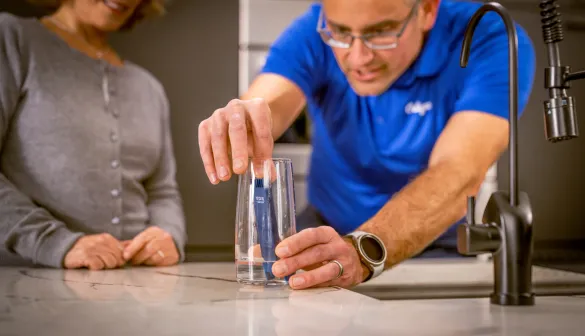
This is where professional testing changes everything.
Water isn’t just H2O flowing magically through pipes. It carries minerals, particles, and dissolved substances from natural sources, treatment systems, plumbing materials, and environmental conditions.
One measurement homeowners often hear about during testing is total dissolved solids — essentially the combined amount of dissolved minerals, salts, and substances present in the water supply.
Now, high dissolved solids don’t automatically mean dangerous water. That’s important. Sometimes they simply affect taste or create mineral buildup. Other times, elevated levels may point toward broader treatment needs.
But understanding what’s present helps homeowners stop guessing.
And honestly, clarity reduces stress more than people expect.
Different Homes, Different Water Stories
What fascinates me most about household water is how personal it becomes.
Two homes just a few streets apart can have completely different experiences depending on plumbing age, local infrastructure, well depth, soil conditions, or municipal treatment practices. There’s no universal “normal.”
That’s why online advice sometimes creates confusion instead of solutions.
A filtration system that works beautifully for one family may do almost nothing for another. Some households need sediment filtration. Others benefit more from softening systems or carbon filters. Sometimes the issue isn’t treatment at all — it’s aging plumbing hidden behind walls for decades.
The important thing is understanding the actual source of the problem first.
Water Affects More Than Health
People naturally focus on whether water is safe to drink, which obviously matters. But water quality shapes everyday comfort in dozens of smaller ways too.
It affects how soap lathers. How long appliances last. The feel of laundry. The taste of coffee. The condition of pipes and fixtures.
Even mood, honestly.
Bad water creates tiny daily frustrations people don’t always recognize consciously. And because those frustrations happen repeatedly, they slowly wear people down.
Good water, on the other hand, fades quietly into the background. That’s usually how you know things are working properly.
Paying Attention Before Problems Grow
The good news is that most water concerns are manageable once identified correctly.
Testing, maintenance, and targeted treatment systems have become far more accessible than they used to be. Homeowners no longer need to rely entirely on guesswork or tolerate issues simply because they’ve gotten used to them.
And maybe that’s the biggest takeaway here.
Water shouldn’t be something people merely tolerate.
It’s part of daily life in ways we barely notice until something changes — and when it’s clean, balanced, and functioning properly, a home simply feels better. Not dramatically. Not magically.
Just quietly, noticeably better in all the little moments that make up ordinary life.

Admin
Contributor at Readnify covering useful ideas, practical context and emerging stories.
Bring your expertise to Readnify.
We welcome original, useful guest contributions that help readers make better decisions.