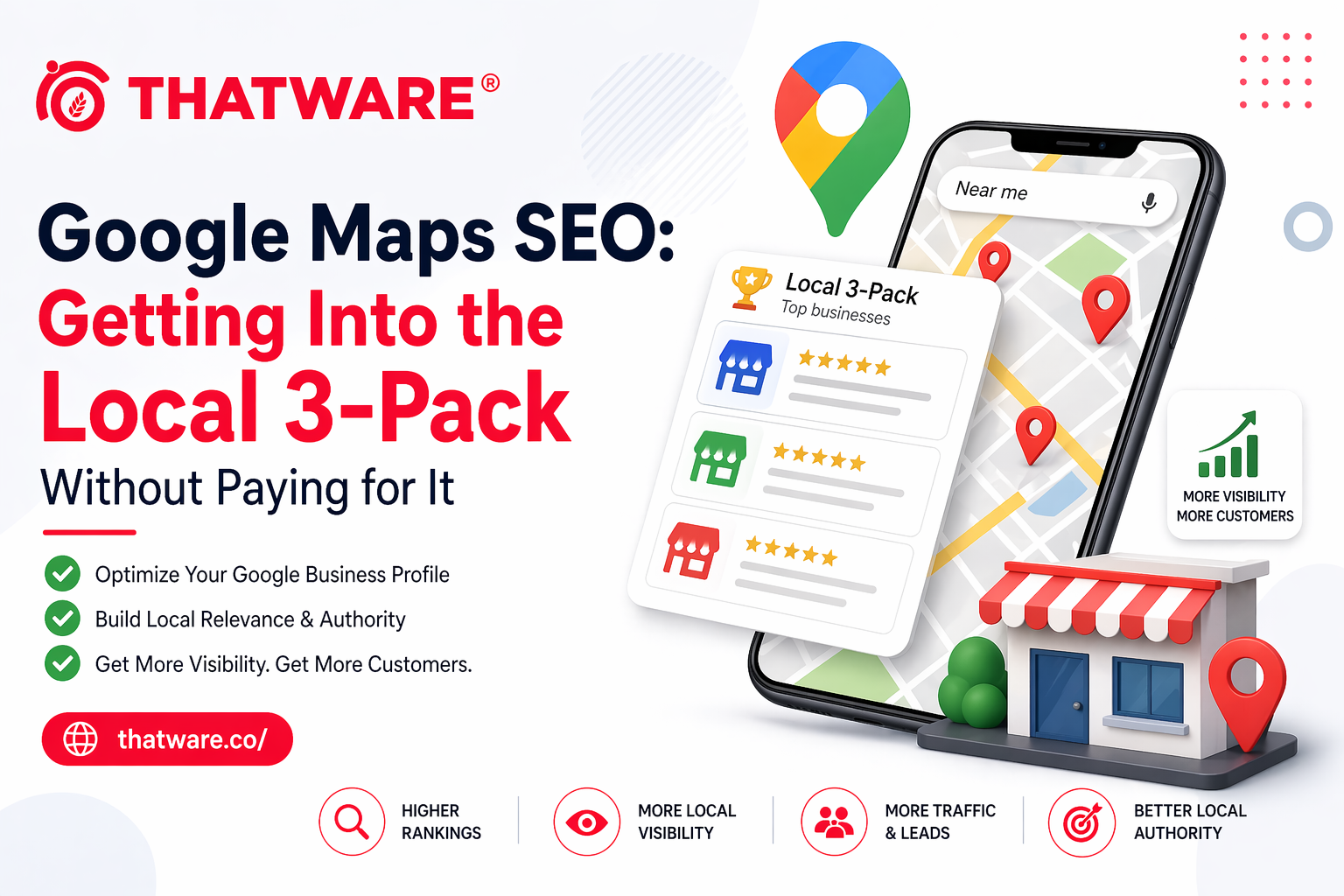
Most local business owners discover the Google Maps 3-pack the same way. They search for their own category in their own town, and three competitors show up in a box at the top of the page. Their own listing is buried somewhere below, maybe on page two, maybe not ranking at all for certain searches.
The 3-pack isn’t magic. It’s not random. And getting into it doesn’t require an ad budget, which is the part that surprises people the most.
What it does require is a systematic approach to a set of ranking signals that Google uses to decide which businesses deserve top placement in local search. Understanding those signals is the starting point for everything.
Why the 3-Pack Matters So Much
Let’s be real about why everyone wants to be in those top three spots. When someone searches “dentist near me” or “best plumber in [city]” on their phone, the map pack is often the only thing they look at before calling. The organic results below it barely get a glance. Studies have consistently shown that the majority of clicks on local searches go to the map pack results, not the traditional blue links.
For brick-and-mortar businesses, service area businesses, restaurants, clinics, and basically any business where physical location or service area matters, this is the most valuable real estate in search. And the fact that it’s earnable through optimization rather than bidding makes it worth understanding deeply.
The Core Signals Behind Local Rankings
Google weighs three broad factors when ranking local results: relevance, distance, and prominence. Distance is the one you can’t do much about, your business is where it is. But relevance and prominence are very much within reach.
Relevance is about how well your Google Business Profile matches what someone is searching for. This is where a lot of businesses leave easy wins on the table. An incomplete profile, vague category selections, sparse service descriptions, these send weak relevance signals. A well-optimized profile with specific categories, detailed services, regular posts, and accurate attributes tells Google exactly what you do and for whom.
Prominence is broader. It’s about how well-known and trusted your business appears across the web, including review quantity and quality, citations across directories, links from local sources, and engagement on the profile itself. A business that has a hundred recent reviews, consistent NAP information across the web, and an active presence signals differently than one with a sparse footprint.
Getting this right is exactly what google maps seo services providers focus on, and the difference between a well-executed local strategy and an ignored one shows up clearly in rankings.
Reviews: The Thing Everyone Underestimates
Reviews are not just a reputation signal for potential customers. They’re a direct ranking factor for local search. More reviews, newer reviews, and higher average ratings all correlate with better 3-pack placement.
The awkward truth is that most satisfied customers don’t leave reviews on their own. They have a good experience, they go home, and they think about leaving a review for approximately thirty seconds before getting distracted. The businesses with the most reviews have usually built some kind of system for asking, whether that’s a follow-up text, a QR code at the counter, or a polite request at the end of a service.
Responding to reviews also matters, both to Google’s freshness signals and to the humans reading them. A business that responds thoughtfully to criticism and thanks people for positive feedback looks engaged and trustworthy. Which it is.
Citation Consistency Is Boring but Important
Citations are mentions of your business name, address, and phone number across the web. Directories, local publications, industry sites, chambers of commerce. Google cross-references these to confirm that the information in your Business Profile is accurate and consistent.
Inconsistencies cause confusion. If your address is listed slightly differently across twenty directories, that erodes trust in the data. Cleaning this up isn’t exciting work, but it’s the kind of thing that removes ranking friction in a way that shows up in results.
The Website Behind the Profile
A Google Business Profile doesn’t exist in isolation. The website it links to also plays a role in local rankings. Local keyword relevance in page titles and copy, structured data markup like LocalBusiness schema, landing pages for specific service areas, all of this ties back into how well Google can confirm what you do and where you do it.
A good local seo services strategy doesn’t treat the Business Profile and the website as separate projects. They work together, and optimizing both in alignment produces better results than focusing on just one.
Getting In and Staying In
The 3-pack isn’t a one-time achievement. It fluctuates based on competitive activity, review velocity, and algorithm updates. Businesses that maintain their positions tend to keep adding reviews, keep their profiles current, and keep building local relevance over time.
The good news is that the work compounds. A strong local presence built over eighteen months is genuinely hard for a new competitor to replicate quickly. It’s not impenetrable, but it’s a real moat.
Local search is one of the few places where a well-run small business can genuinely outrank a much larger competitor, simply because they know their community better and they’ve been more intentional about their digital presence. That’s a meaningful opportunity, and it doesn’t cost a single dollar in ad spend to pursue.

Admin
Contributor at Readnify covering useful ideas, practical context and emerging stories.
Bring your expertise to Readnify.
We welcome original, useful guest contributions that help readers make better decisions.